The manufacturer’s brand is what buyers search for, not yours
Brand-led catalogue structure, so the search that finds the product also finds you.
Industry
For companies that represent someone else’s brand in a market.
A distributor sells to two audiences at once — the specifier who chooses the brand and the buyer who purchases the material — and the manufacturer whose name is on the box is watching how you represent it.
Four problems that come up repeatedly, and how we address them.
Brand-led catalogue structure, so the search that finds the product also finds you.
Separate paths for specification and for procurement, from the same catalogue.
Project portfolios, application guidance and training content that a pure reseller does not have.
Price presentation driven by a configurable rate rather than hard-coded numbers that go stale.
Manufacturer websites built for buyers who are not in your country and do not speak your language.
Storefronts, themes, and the operational layer that keeps them running.
Measurement a decision can actually be made from.
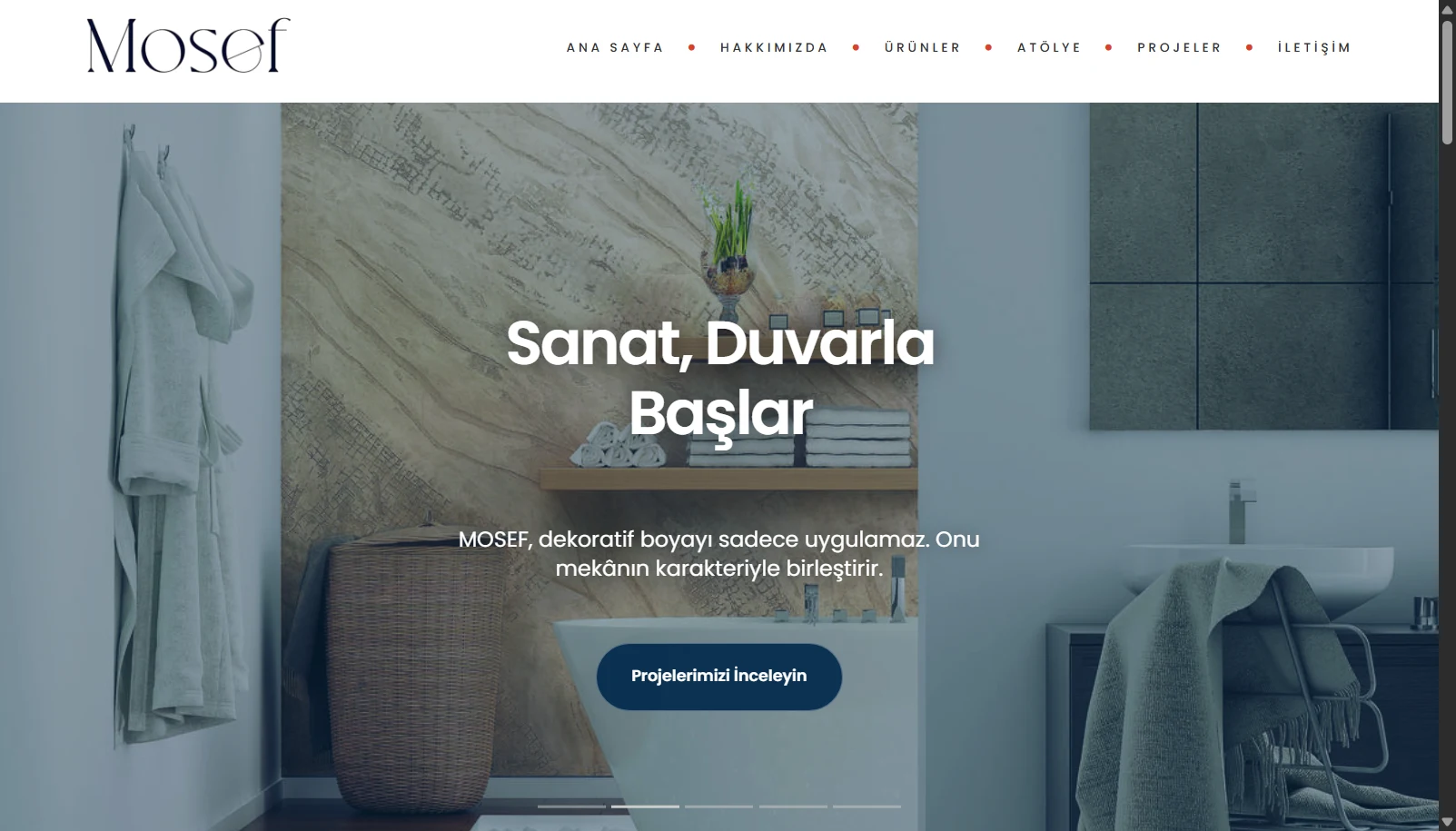
Mosef — A distributor platform for three Italian finish brands · Read the case →
Around the brands, because that is what a specifier searches for. Each represented brand gets its own identity and product tree, with the distributor as the accessible local source.
Yes, subject to whatever your agency agreement permits. Most manufacturers supply an asset pack for exactly this purpose.
Where prices are shown at all, they are computed from a stored rate that an operator updates, rather than typed into the page. A distributor with a hard-coded price list is losing margin quietly.
Yes — document libraries, pricing tiers and order history behind authentication, with role-based access.
Yes, where the system exposes an interface. Where it does not, scheduled imports are the realistic alternative and we will say so rather than promise a live integration that will not hold.
The structure is built to add one. That is a normal event in distribution and should not require rebuilding the site.
Tell us what the system needs to do. We will tell you what it takes to build, and what it costs, before any work begins.